Living in Worcester's Canal District: History, Food, and Life Near Kelley Square
Two hundred years ago, this corner of Worcester was a swampy patch of land where horse-drawn barges unloaded coal and cotton. Today it is the city's most talked-about neighborhood, with a ballpark, a public market, and more than 50 places to eat and drink within walking distance.
Here is the story of how the Canal District got its name, what it is like to live here now, and why so many people who move to Worcester end up wanting an address within walking distance of Kelley Square.
Why it's called the Canal District
In the early 1800s, Worcester had a problem: it was landlocked. Getting goods to the coast meant slow, rough ox-cart roads. The answer was the Blackstone Canal, a 45-mile man-made waterway running alongside the Blackstone River from Worcester to tidewater in Providence, Rhode Island.
Inside the city, the canal was fed by the Mill Brook. It passed through a turning basin at Thomas Street, ran under the spot where Union Station stands today, and continued straight down Harding Street. Where the canal and the brook met, they formed a marshy pocket locals called "The Island," around present-day Crompton Park.
What actually moved through the Canal District
A Blackstone Canal barge, by the numbers
Illustration for scale. A trip between Worcester and Providence took two to four days.
The canal cut freight costs to the coast by more than half and helped turn a farming town into an industrial city. It also sat in a valley with an even bigger claim to fame: the Blackstone River Valley is recognized as the birthplace of the American Industrial Revolution, home of Samuel Slater's first water-powered cotton mill in 1790.
days by canal barge
Horse-drawn barges took two to four days to travel between Worcester and Providence.
hours by rail, 1847
The new railroad made the same trip in about two hours, and the canal could not compete.
hour to Boston today
From Union Station, the commuter rail reaches Boston in roughly an hour to an hour and a half.
The Canal District, decade by decade
The canal lasted only twenty years, but it set everything that followed in motion. The neighborhood's mills, factories, and rail lines all grew from it, including the building The Reeds calls home.
- 1796
Providence merchant John Brown first proposes a canal linking Providence to landlocked Worcester.
- 1825
Digging begins, largely by Irish immigrant laborers.
- 1828
The Blackstone Canal opens. The boat Lady Carrington makes the first trip up to Worcester.
- 1847
The Providence and Worcester Railroad is completed and makes the same 45-mile trip in about two hours.
- 1848
The canal shuts down, the same year Worcester is incorporated as a city.
- 1865
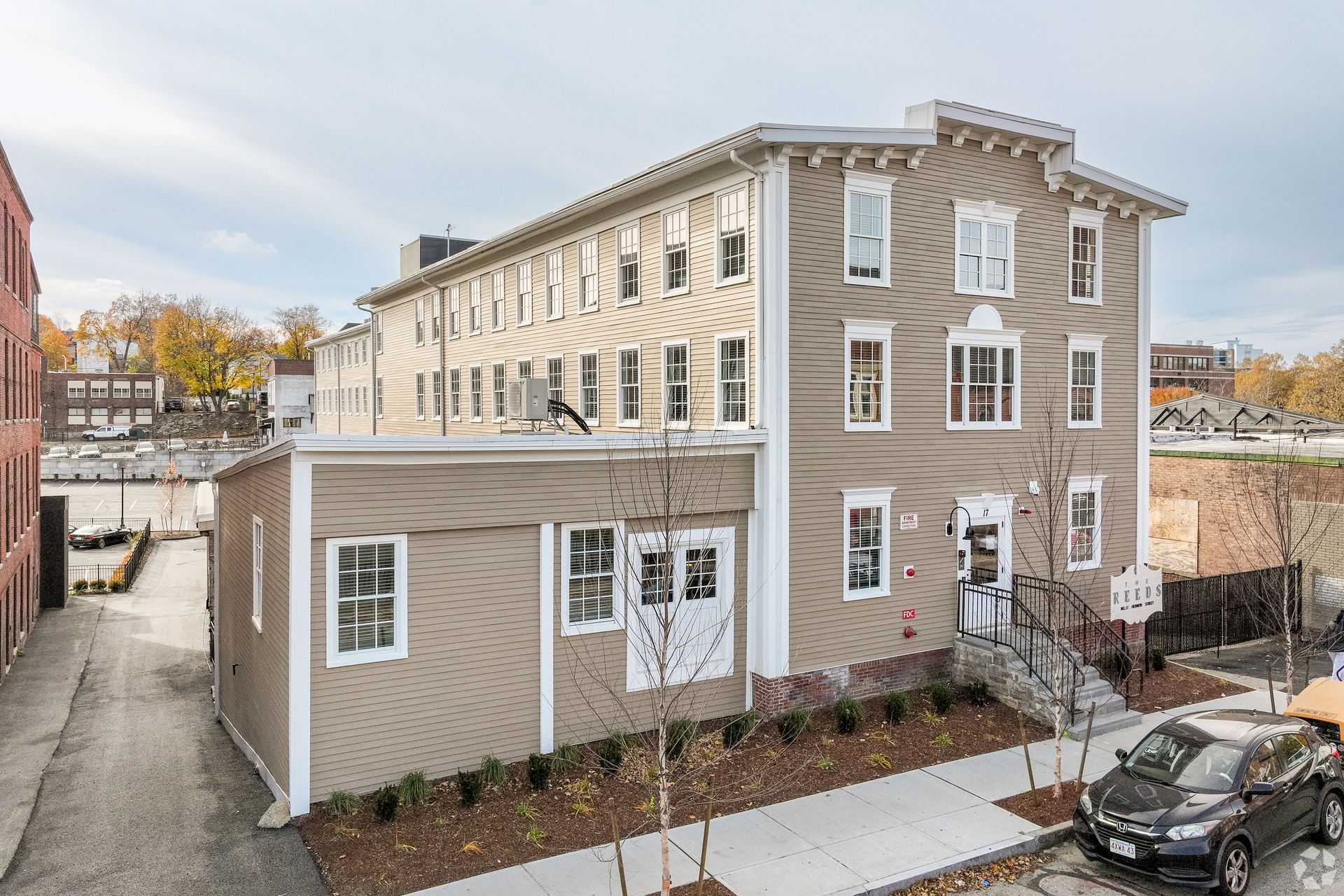
The Taylor & Farley Organ Company builds its reed-organ factory. Today it is The Reeds.
- 1911
Union Station opens, the grand Beaux-Arts station that still anchors the district.
- 1918
Sgt. Cornelius F. Kelley, a Worcester soldier, dies of wounds in France during World War I. The square is later named in his honor.
- 2019
Reconstruction of Kelley Square begins, turning the stoplight-free tangle into a modern roundabout.
- 2020
The Worcester Public Market opens at 160 Green Street.
- 2021
Polar Park opens as home of the Worcester Red Sox.
Where The Reeds fits in the story
The canal closed in 1848. Seventeen years later, in the industrial boom it helped start, the Taylor & Farley Organ Company built a brick-and-timber factory for its reed organs. That building is now The Reeds, listed on the National Register of Historic Places.
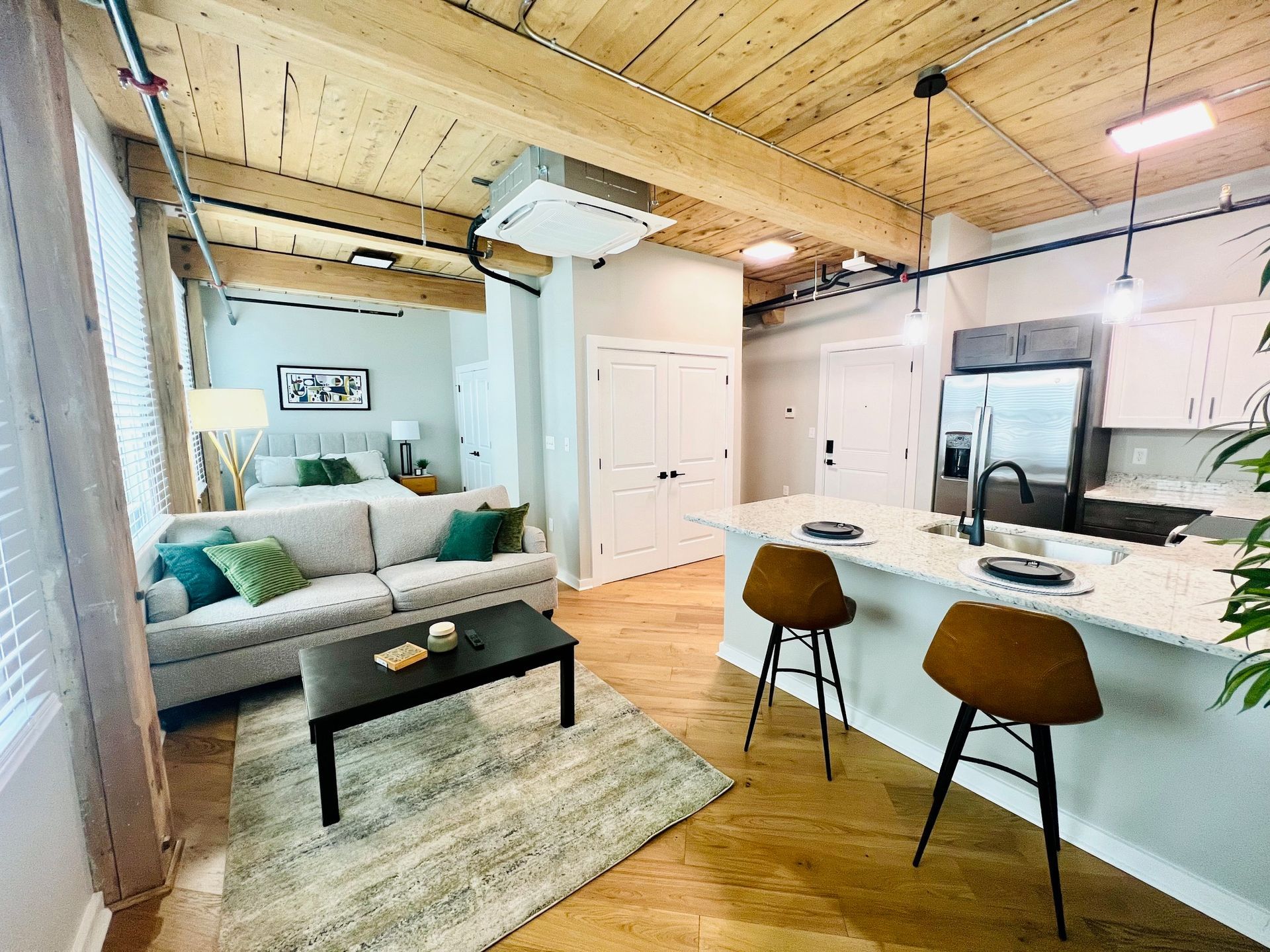
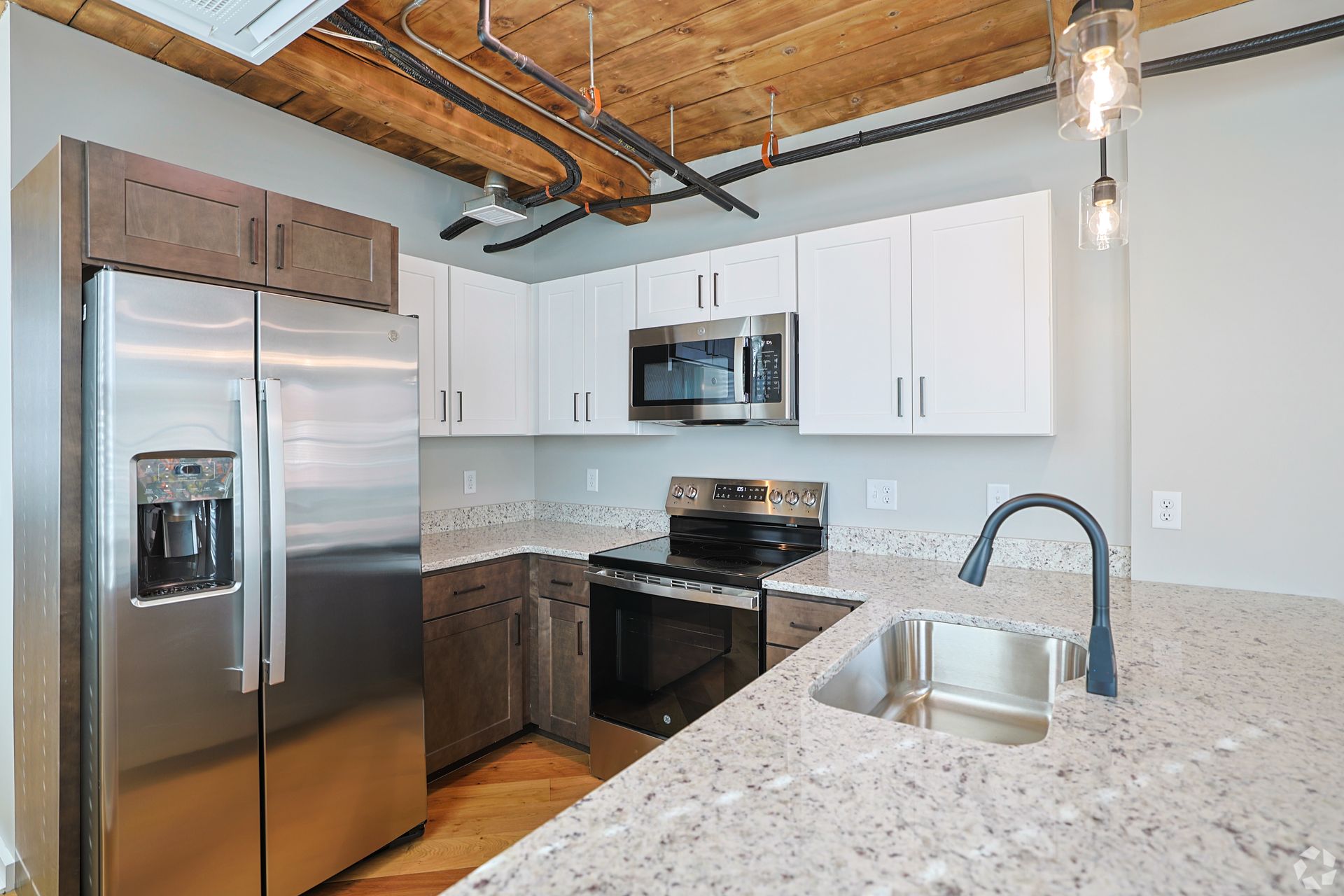
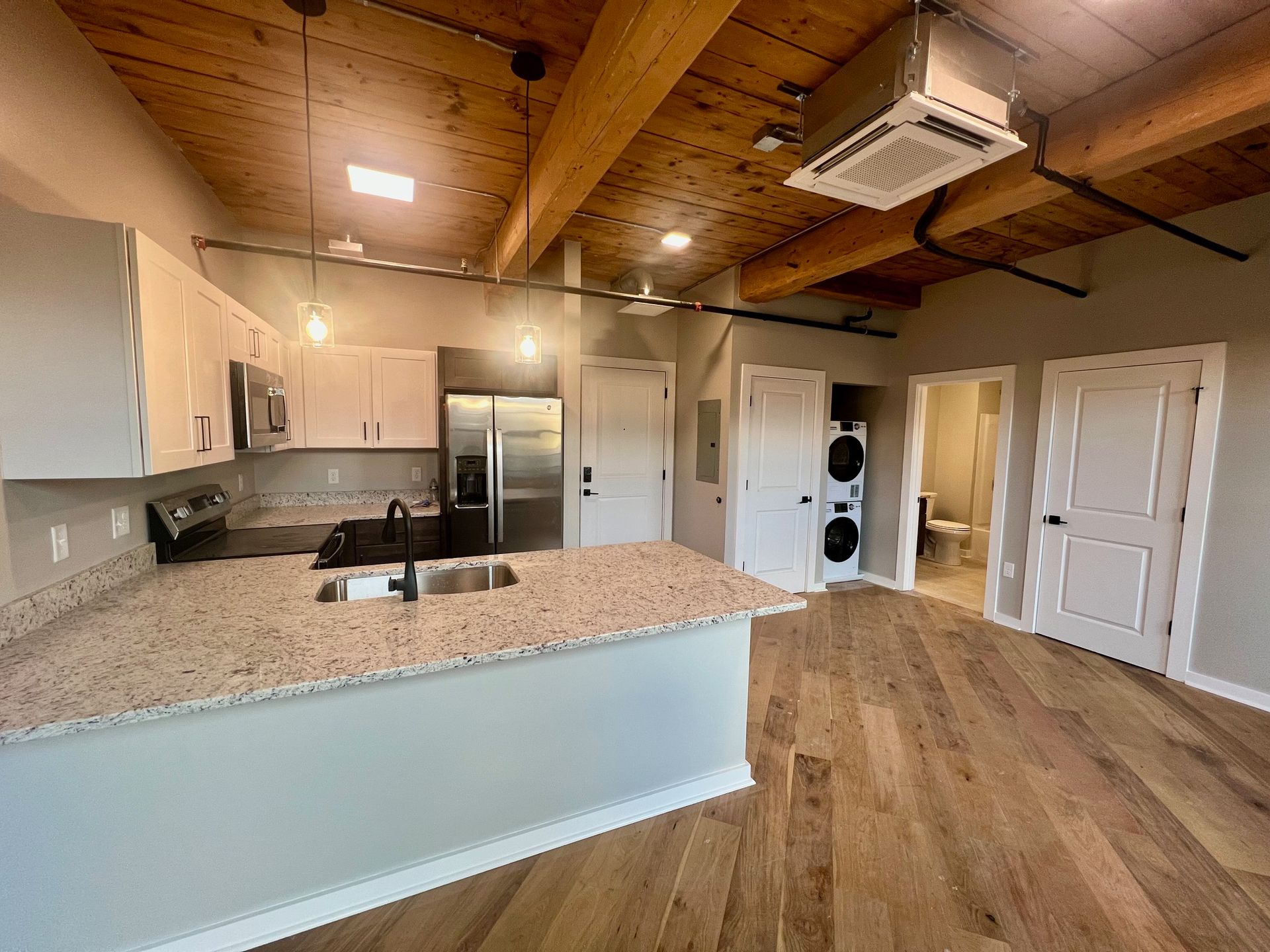
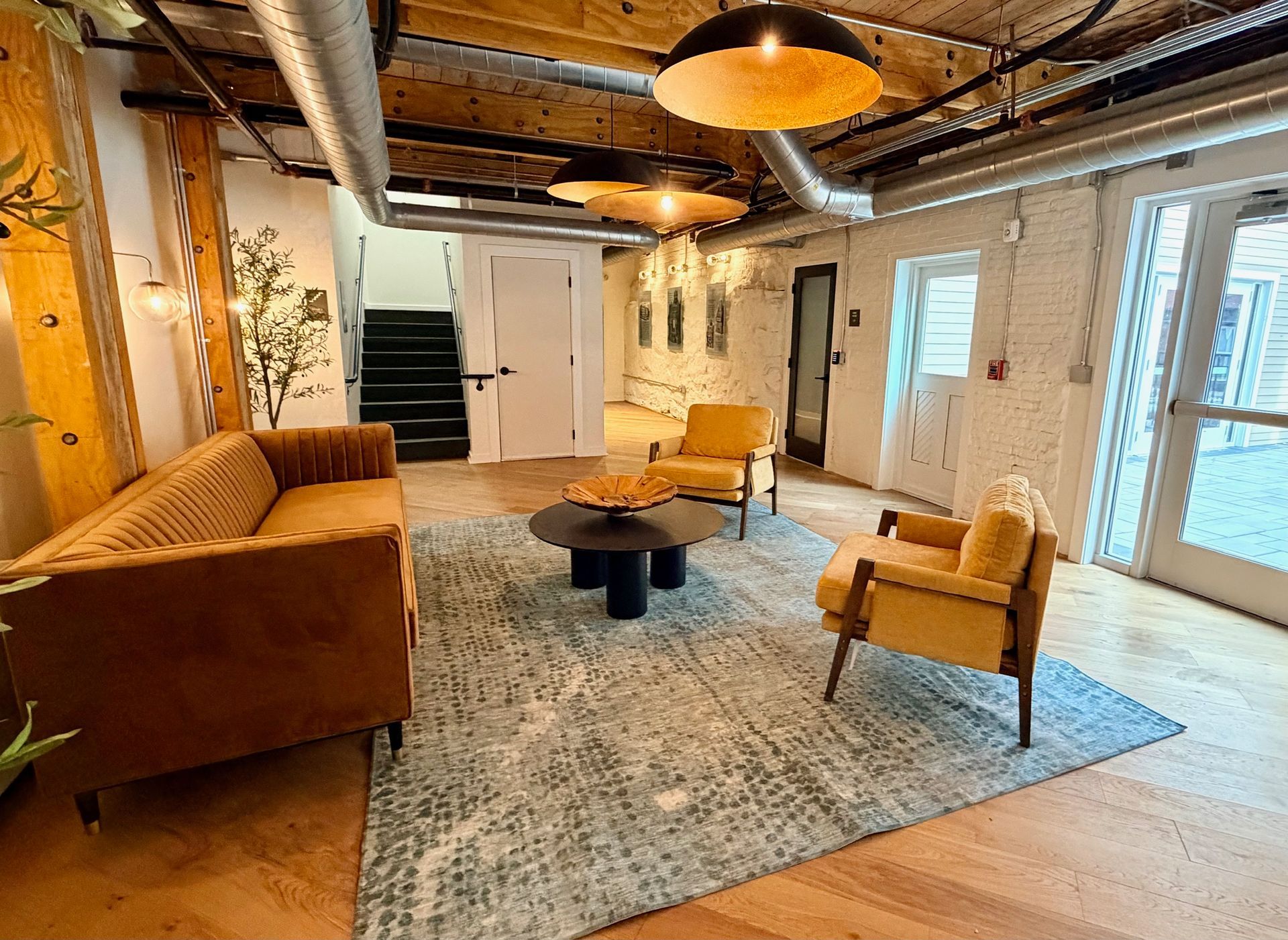
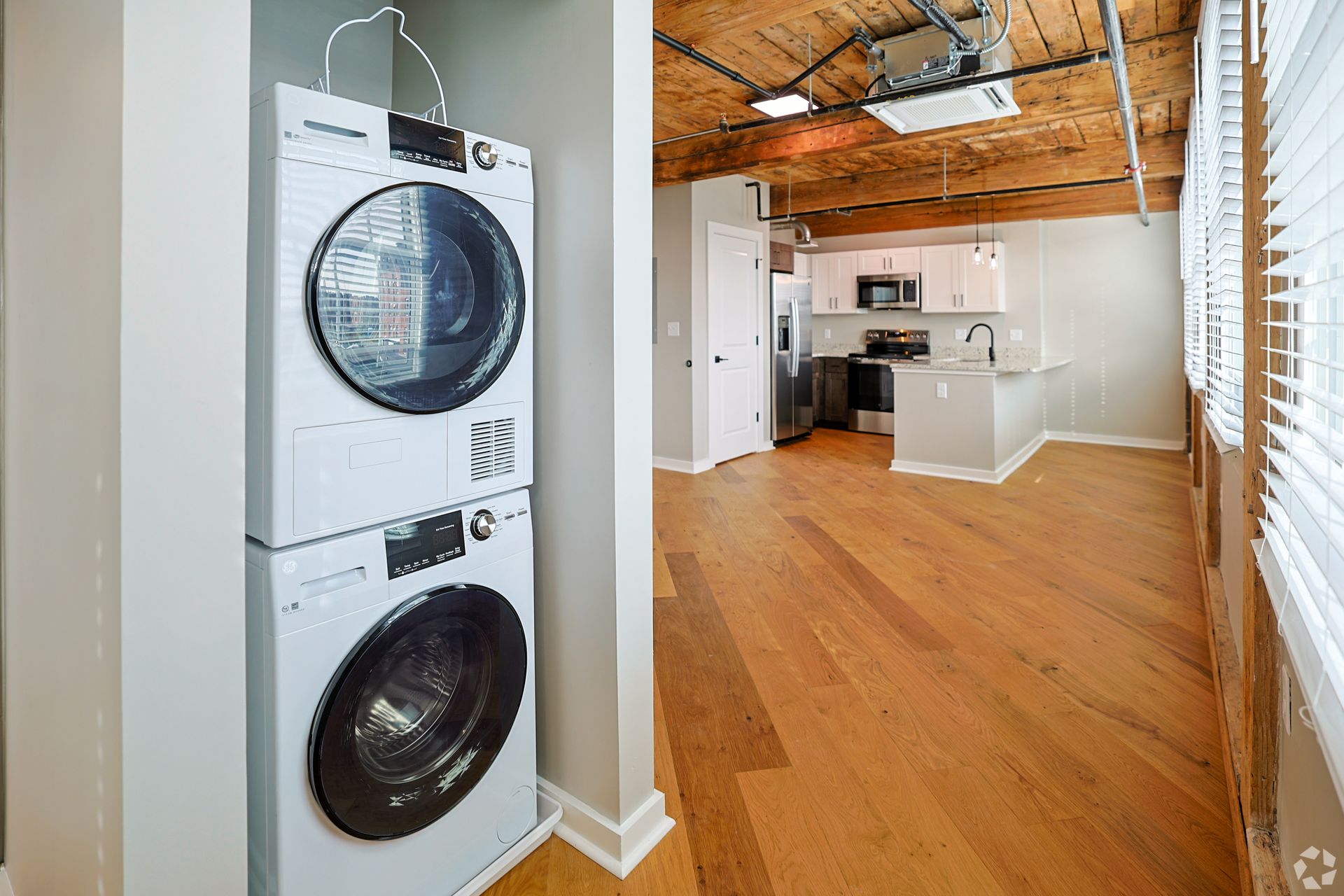
Living here means living inside the neighborhood's history: original wood columns, heavy timber joists, exposed brick, and big factory windows, with in-unit laundry, central air, and modern kitchens.
Kelley Square: from "most dangerous" to the heart of it all
Originally called Vernon Square, the intersection grew where local roads met to connect mills, warehouses, and homes. It was renamed for Sgt. Cornelius F. Kelley, an Irish immigrant from Worcester who served with the 26th Yankee Division and died of wounds in France in 1918.
With up to seven converging streets, highway ramps from I-290, and no traffic lights for most of its history, Kelley Square earned a reputation as one of the most chaotic intersections in Massachusetts. A reconstruction that began in 2019 rebuilt it as a modern roundabout, right as the Public Market and Polar Park arrived and turned the area into the city's busiest destination.
Fewer than twenty years of canal shaped two centuries of neighborhood.
What it's like to live here now
The Canal District is consistently named one of the best Worcester neighborhoods for young professionals, and it's easy to see why. You can walk to dinner, a ballgame, a farmers' market, and the train to Boston without moving your car.
Worcester Public Market
Opened in 2020 at 160 Green Street, with around 36 local vendors, many minority-, women-, and immigrant-owned, plus a Wachusett Brewing taproom.
Polar Park
Home of the Worcester Red Sox, the Triple-A affiliate of the Boston Red Sox, with community events all year.
Union Station
The restored 1911 station connects to the MBTA commuter rail to Boston, Amtrak, and WRTA buses.
Worcester Ice Center
Public skating and hockey leagues, with Baystate Brewery's beer and pub food right nearby.
Neighborhood favorites near The Reeds
A few of the spots residents can reach on foot:
BirchTree Bread Co.
Artisan breads, sandwiches, and wood-fired pizza inside Crompton Place.
Crompton Collective
A curated marketplace of vintage finds, antiques, local art, and handmade gifts.
Seed to Stem
Houseplants, botanical goods, and gifts. Perfect for filling those factory windows.
Bocado
Spanish small plates, charcuterie, and an extensive wine list.
George's Coney Island
A longtime Worcester hot dog institution with a famous neon sign.
El Patron
A neighborhood favorite for a night out close to home.
A few Worcester facts worth knowing
The smiley face
Worcester graphic designer Harvey Ball created the iconic yellow smiley face here.
"Wormtown"
The nickname came from a local punk fanzine, the Wormtown Punk Press, and is now worn with pride.
Heart of the Commonwealth
Worcester sits near the geographic center of Massachusetts, which is why its official symbol is a heart.
City of Seven Hills
Like Rome, Worcester is known for its hills, which is part of what gives the city its views.
Who the Canal District suits best
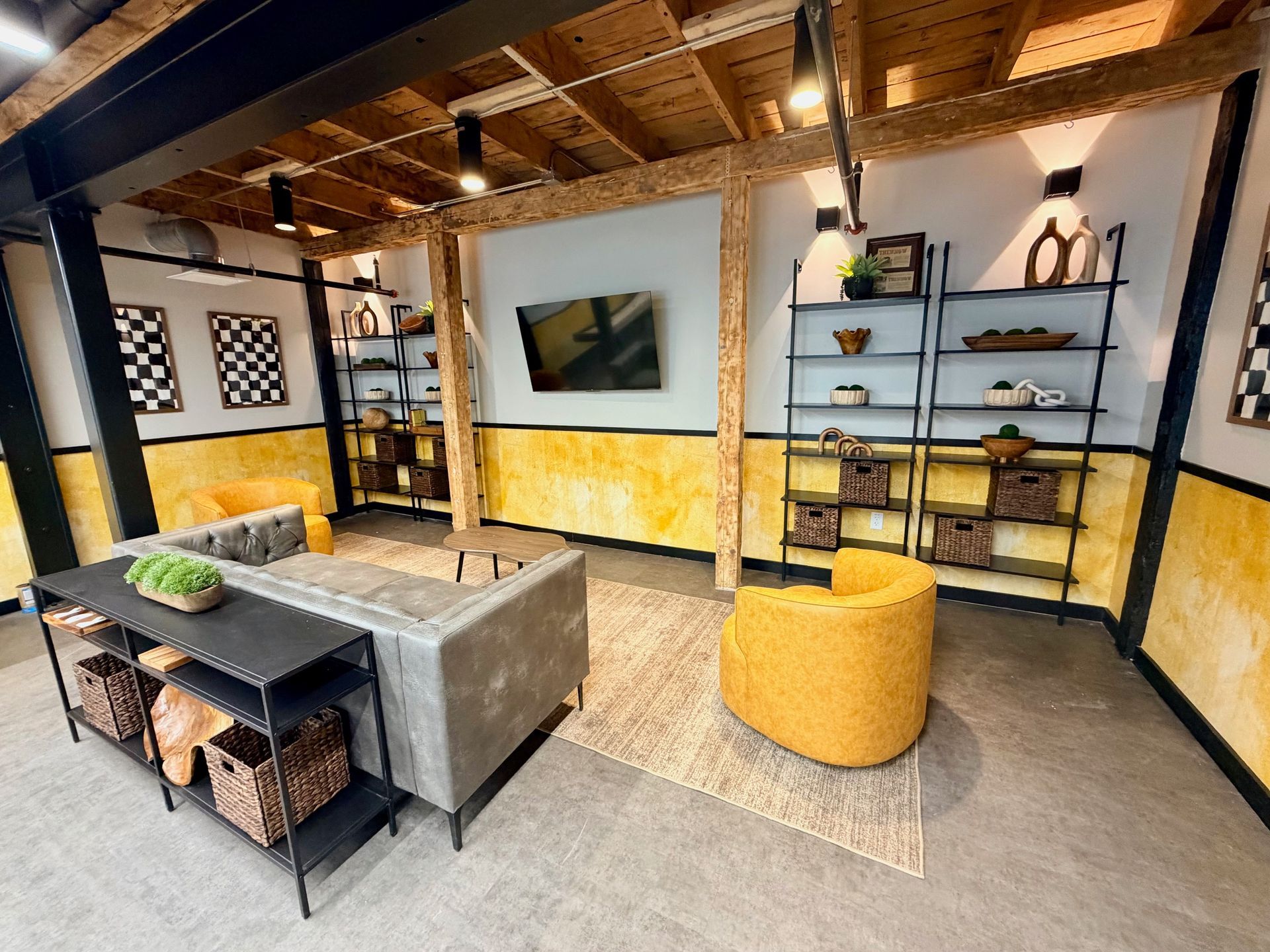
Young professionals who want walkable dining and nightlife. Boston commuters who want the train a short walk away. Graduate and medical students a short trip from WPI, Clark, and UMass Chan Medical School. And anyone who would rather live somewhere with a story than in a building that could be anywhere.
See where you'd live
Explore apartments near downtown Worcester at The Reeds, or view current studio, one-, and two-bedroom floor plans.
Frequently asked questions
Why is it called the Canal District?
The neighborhood is named for the Blackstone Canal, a 45-mile waterway that opened in 1828 and connected Worcester to Providence, Rhode Island. Inside Worcester the canal ran through this area, passing under today's Union Station and down Harding Street.
Is the Blackstone Canal still there?
The canal closed in 1848, but historical markers and preserved remnants remain, and the region is part of the Blackstone River Valley National Heritage Corridor. The neighborhood keeps the canal's name.
Who is Kelley Square named after?
Sergeant Cornelius F. Kelley, an Irish immigrant from Worcester who served with the 26th Yankee Division and died of wounds in France in 1918, during World War I.
How long is the train from Worcester to Boston?
The MBTA Framingham/Worcester Line runs from Worcester's Union Station to Back Bay and South Station in roughly an hour to an hour and a half, depending on whether the train is express or local.
What is there to do in the Canal District?
WooSox games at Polar Park, the Worcester Public Market, vintage shopping at Crompton Collective, skating at the Worcester Ice Center, and dozens of restaurants, bakeries, and breweries within walking distance.
Is The Reeds in the Canal District?
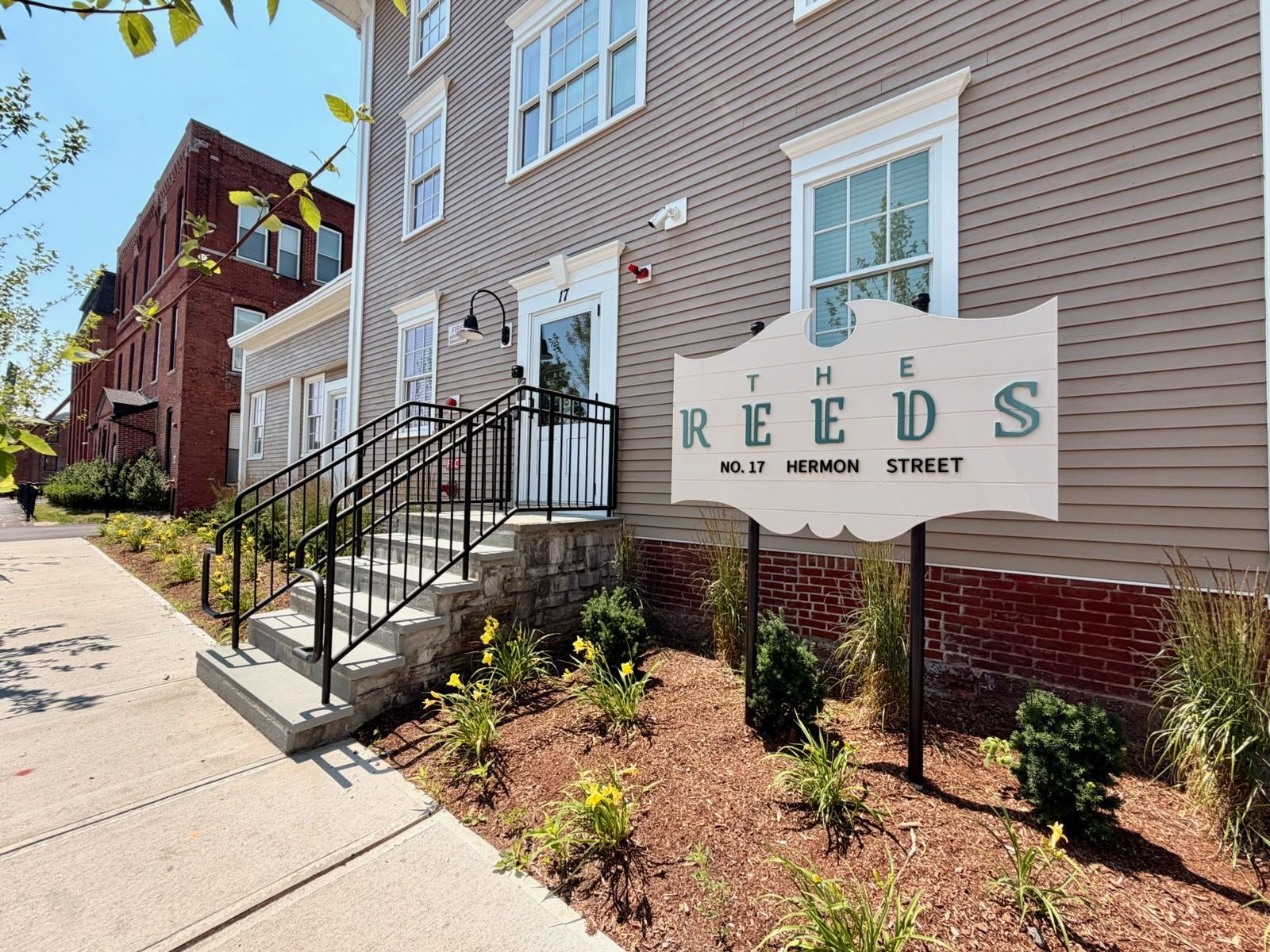
Yes. The Reeds at 17 Hermon Street is part of the Canal District neighborhood, close to Kelley Square, the Worcester Public Market, Polar Park, and Union Station.
The Reeds is a boutique apartment residence in a restored 1865 factory in Worcester's Canal District, listed on the National Register of Historic Places. Studios, one-, and two-bedroom apartments are now leasing.
Schedule a Tour View Availability